Issue 04 Issue 04

Subscribe Now

Join our e-mail list for major Swindle Magazine updates:


AddThis Social Bookmark Button

More Articles by: Steve Zeitzoff
Related Articles:

WEIDMAN’S WORLD

By Steve Zeitzoff
Portrait By Ryan Murphy

David Weidman

David Weidman lives in his own world. By no means is he an aloof loner; the artist is, in fact, one of the friendliest, most jovial 85-year-olds you’ll come across. The world of David Weidman is simply a reflection of his unique creative touch. From the oversized, whimsical ceramic numbers that adorn the facade of his Los Angeles home to the multitude of his artwork that fills the inside, it is clear that he has built his own nest and now lives in it. The primary inhabitant of his world, besides David himself, is his wife Dorothy, also an artist. In many of his works, there is an invisible line, drawn by heart rather than by hand, that marks Dorothy’s tremendous influence, or rather the confluence of their kindred vision.

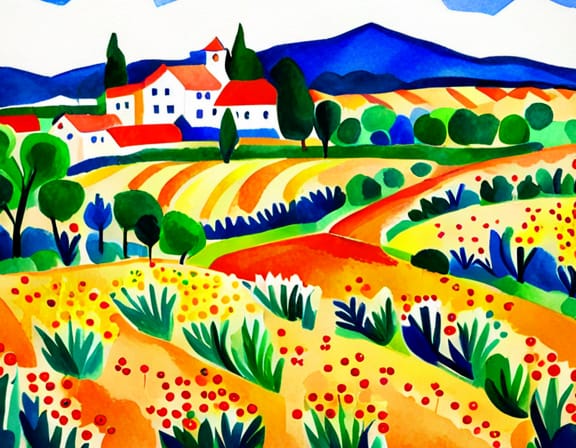
Weidman’s greatest acclaim, or simply his biggest connection to a more widespread culture, comes from his work on many popular cartoon series in the ‘50s and ‘60s. While the characters on those cartoons often bore appearances given to them by other artists, the scenery and atmosphere that surrounded those characters reflected Weidman’s vision. The endearing quirks of the backgrounds he drew seemed to speak more about Weidman himself-witty, colorful, and slightly goofy-than one might expect from a commissioned illustrator. Indeed, they were worlds of his own creation – the characters were simply drawn into it.

When did you start your career as an artist?
I went to art school on the GI Bill at a small institution called Jepson. Roy Jepson was a teacher at Parsons (School of Design, in New York) who started a school funded by the Gis. Jepson hired a teacher named Rico LeBrun, who was an astonishing artist in my book. This was a whole school of Gis, and we were all Norman Rockwell fans. And basically, Mr. LeBrun took us and reeducated us therapeutically to find our own voice in art, and it was an amazing experience.

Did you seek a career in animation after art school?
Well, no. Actually, I was just looking for work so I could eventually buy a house and raise a family. When I left school, I basically said to myself, “Okay, now what?” So I made a portfolio, and went out to find work. My wife Dorothy suggested I try animation, because she had done work in that field. So I first applied to Disney, and they really didn’t like my style. There was a certain type of artist they were looking for and I was part of a group who worked more graphically than realistically. So I landed a job at UPA; they had a more graphic approach, you know. John Hubley, who started UPA, who hired a lot of us with this new approach to animation, started hiring people who were doing the opposite of what they were doing at Disney, even in the writing of the cartoon. At Disney, they would draw animals like people, you know, and we would draw people like animals. You know, we had Magoo.

Mr. Magoo?
Yeah, Magoo. We had Gerald McBoingBoing, who was a little boy who would speak by making weird sounds rather than words.

Was the job fun? Because the animation style to me is hilarious.
When I started, it was actually a bit torturous, because I would do what they call “in-betweens,” which was filling in the gaps in between the major frames of the cartoon. The other problem we faced early on was translating our color work to black-and-white, because this was at a time when televisions were only black-and white. We were used to working in color, so that was also quite a big feat. It was a factory. We really worked hard and long hours.

Did you enjoy telling the story through animation?
I was more interested in the graphics that were involved than the end product. A lot of the people were more into the storytelling and comedic aspects of the storyline, but I was basically exploiting my talents as a designer.

What were some of the cartoons you worked on?
I wouldn’t even know the names of the animations at the time. I was mostly doing the backgrounds. We did so many cartoons; it was like a factory. You would get a storyline, there was a writer and a director who would usually come up with a storyboard, and from there they would work out the audio and the voices. Then I would start making the drawings. It was a group effort, really.

David Weidman

What were some of the animation houses you worked at?

I worked at UPA for a few years. The workload there was very high and we would have very little time to create the graphics. A lot of people couldn’t handle the stress there. It was really a factory. We would produce a lot in a short period of time. From there, I went to this other small studio in Hollywood that was called TV Spots, where I worked for many years. I also did a few seasons at Hanna-Barbera, where I was head of the background unit. The animation work was very seasonal; you would work about 6 months a year.

Were you only working on cartoons at the time?
I also did various illustration work for magazines as well. People liked my style of drawing, so I did quite a few magazine illustrations. When DNA was first discovered, Scientific American asked me to illustrate DNA. That was quite a task, considering no one had seen DNA before. It was interesting formulating the visuals for something like that. Shortly after, John Hubley hired me for a film called Finian’s Rainbow, which was a full-length animated feature film. It was a huge project that had an incredible score. He spent years working on it. He sat me and a few other designers down and said, “Okay, this is the story – now draw.” He ended up not getting financing for the film, so it never was released.

So after all the animation work for other companies, you decided to go on your own as an artist?
I wanted to do more personal projects after all the animation work I had done. My wife suggested I do some screenprints. She used to teach silkscreening at Jepson, where we met. She suggested I take some of my work and translate it onto the silkscreened format. My first screenprints were really similar to what I was doing in the animation field or typical of what I might do in a background.

In your screenprinted poster series, you’ll incorporate words and phrases that touch on subjects like religion and politics. How were the reactions to that stuff?
Well yeah, I would express my thoughts and views on anything really. I guess I didn’t have enough sense to stay away from it. It was satisfying to me to express my thoughts – very therapeutic. Actually, there was a company that wanted to put my screenprints in a line that they would sell. And they started dictating what they wanted, as far as themes and color schemes. And I thought I would be okay with it, but I couldn’t do it. I couldn’t handle that. And actually, the ones they suggested I do, and did, were failures.

What new animation do you enjoy?
Nothing really. I don’t watch any new animation; it bores me. Occasionally something will catch my eye.

Do you see any new art you enjoy?
Well I see stuff I like all the time. You know, stimulants. It could be anything really…people painting on walls.

Thanks David, we think you are truly a great artist.
It’s funny – all the time I was in school, I couldn’t call myself an artist. And when I went out on my own, I still had trouble calling myself an artist. Now when people ask me what I do, I say, “Artist.” I’ve finally come to terms that I can call myself an artist.

You can purchase David’s artwork at www.weidmanart.com


Subscribe to SWINDLE to read more articles like this!